full day doggy day care Hoboken
doggy daycare 2 hr play

Dogs need exercise in every season. Rain, heat, snow, and cold may change the routine, but they do not remove the need for daily movement. This is why dog walking in Hoboken NJ can play an important role in keeping pets active, happy, and mentally engaged.
Spring brings warmer days and longer hours of daylight. After spending more time indoors during winter, many dogs are eager to get outside again. However, it is smart to ease back into longer walks instead of going full speed from day one.
Rain can also make spring sidewalks slick and muddy. Puddles may hide sharp objects or other hazards. Therefore, walkers should choose safe paths and check a dog's paws after each outing. Spring pollen may also cause itching or sneezing, so small changes in behavior deserve attention.
Summer walks require careful planning. Hot pavement can hurt a dog's paws, while high temperatures can increase the risk of overheating. For that reason, midday walks may not be the best choice when the sun is blazing.
Early morning and evening outings are often more comfortable. Walkers can also choose shady routes, carry water, and keep walks shorter on very hot days. Heavy panting, weakness, drooling, or confusion can signal trouble, so it is better to head home early than push too far.
Rain does not always mean a walk has to be canceled. Many dogs are happy to explore wet streets, while others would rather stay dry. Either way, walkers can adjust the routine to suit the weather and the dog's comfort level.
A shorter route may work well during steady rain. Waterproof gear can also make the outing easier. However, flooded areas and deep puddles should be avoided. Once the walk ends, drying the dog's coat and paws can help prevent chills and skin irritation.
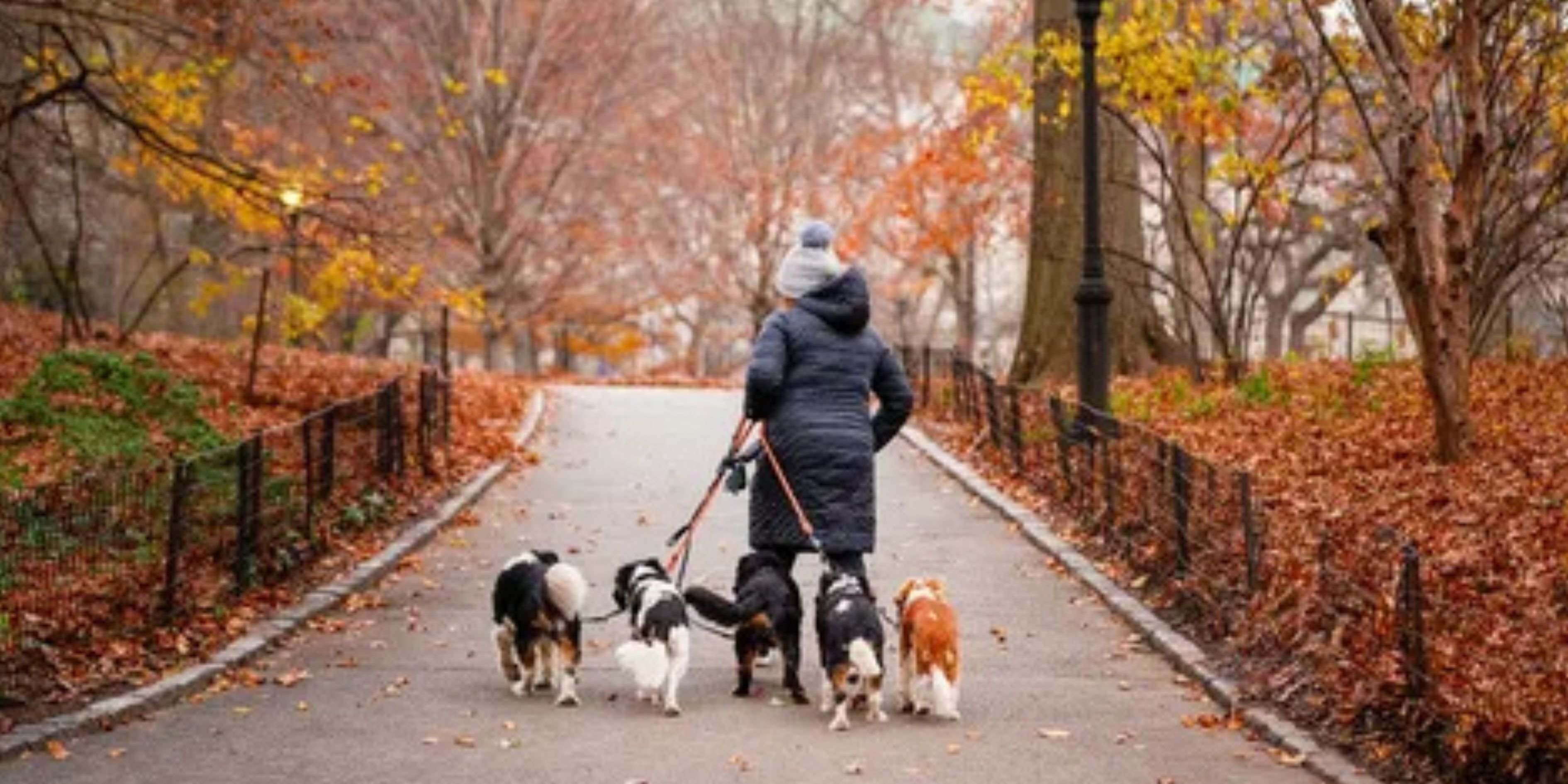
Fall often offers some of the best walking weather. Cooler temperatures can make longer walks easier, and many dogs enjoy spending extra time outdoors. Even so, autumn weather can change quickly, so walkers should check the forecast before heading out.
Fallen leaves can cover holes, debris, or slippery spots. Earlier sunsets also mean visibility matters more. As a result, walkers should stick to familiar, well-lit paths when possible. A little planning can keep a pleasant fall walk from turning into a headache.
Winter brings its own hurdles. Snow, ice, cold winds, and low temperatures can make outdoor walks harder. Yet healthy dogs still need movement, even when the weather is not exactly inviting.
Walkers should watch for shivering, lifted paws, slowing down, or attempts to turn back. These signs may mean the dog is too cold. After winter walks, check the paws for ice, salt, or redness. Shorter outings are often the better choice during severe cold.
Weather can change the walking surface as much as it changes the air. Hot pavement can burn paws, while rain creates slick areas. Snow can cover hazards, and ice can make familiar sidewalks dangerous.
Therefore, walkers should stay alert and look ahead. If a route looks unsafe, taking another path is the smart move. Dogs also tend to sniff and pick things up from the ground, so walkers should watch for broken glass, food scraps, chemicals, and other harmful items.
Before heading outside, walkers should check the weather and think about the route. During the walk, they should watch the dog's body language and energy level. If conditions become unsafe, turning around is always a better choice than taking a chance.
Traffic safety matters as well. Rain, fog, snow, and darkness can make it harder for drivers to see people and pets. Walkers should use safe crossings and avoid risky roads. Having an indoor backup plan can also help when severe weather makes outdoor activity a bad idea.
Dogs often thrive on routine. Regular walks provide exercise, mental stimulation, and a chance to explore new sights and smells. They can also break up long hours spent indoors and help dogs burn off extra energy.
However, consistency does not mean every walk must look the same. Summer may call for short morning trips, while winter may allow a midday outing. Spring and fall may offer more chances for longer walks. The goal is to stay active while making smart changes.
Year-round dog walking takes planning and flexibility. Each season brings different challenges, but regular exercise remains important. By changing routes, timing, pace, and walk length, walkers can help dogs stay active without pushing them too far. Paying attention to the weather and the dog's behavior makes a big difference.
With the right approach, dog walking in Weehawken, NJ can remain safe and enjoyable throughout the year. The trick is simple: know the weather, know the dog, and watch for signs of discomfort. A thoughtful routine can help make every season a good time to get outside.
Yes, most dogs can handle short walks in light rain. However, the outing should match the dog's comfort level and the weather. Avoid flooded areas and deep puddles. Afterward, dry the dog's coat and paws to keep them comfortable.
If heavy rain makes walking unsafe, an indoor play session can fill the gap. Once the weather clears, the regular routine can continue without a problem.
Early mornings and evenings are usually better than the hottest part of the day. Temperatures are often lower, and sidewalks may be cooler. Walkers should also carry water and choose shaded routes when possible.
Watch for heavy panting, weakness, drooling, or unusual tiredness. If the dog seems uncomfortable, shorten the walk and move to a cooler place.
Check your dog's paws after every winter walk. Snow, ice, and road salt can cause irritation or small cracks. Wipe the paws clean when you return home and look for redness or soreness.
It also helps to avoid icy paths when possible. If the weather is extremely cold, a shorter walk may be safer and more comfortable for your pet.
Sometimes, yes. Severe storms, flooding, extreme heat, icy conditions, and strong winds can make outdoor walks unsafe. On such days, staying inside is often the smarter choice.
Indoor games, simple training, toys, and supervised play can keep dogs active. Once the weather improves, you can return to the usual walking schedule.
No. Every dog has different needs. Age, breed, size, coat, fitness, and health can affect how well a dog handles different weather conditions.
Puppies, older dogs, and dogs with special needs may need shorter walks or more breaks. A good routine should fit the individual dog rather than forcing every pet to follow the same plan.